Sal Difalco
SIMPLE WOODEN HOUSES and barns, naively ordered, and a domed stone church make up the village. Pretty green fences contain blocks of warm reds, mauves, and yellows. Oaks and sycamores stud the surrounding hills. The sky is a linen sheet this afternoon. Marco, the village blacksmith, in his black leather apron, is courting his beloved Gerlinde, who wears a flowing gown of navy blue and whose eyes look like black plums. He leads her gently across the meadow, holding her under the arms. Is she sleeping? She seems so light!
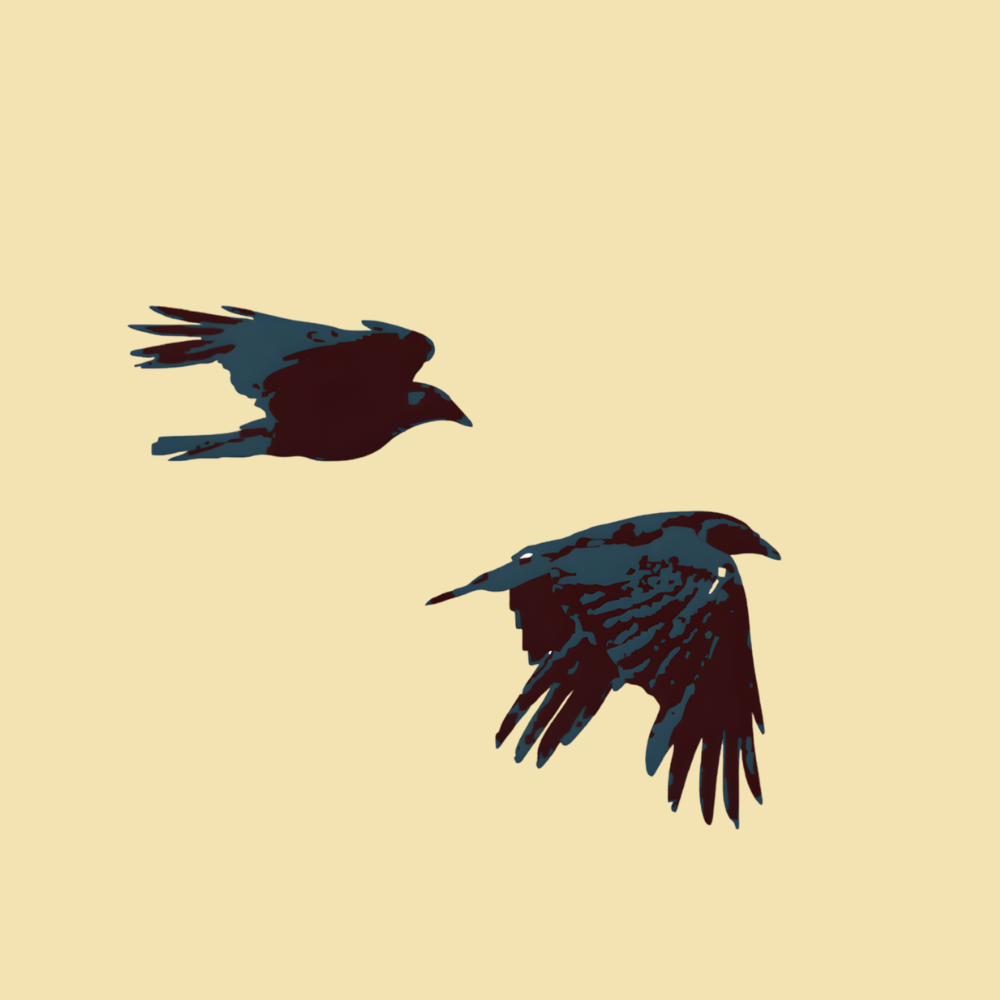
Two sloe-black crows sitting on a fence debate this.
“I say she is intoxicated with fortified wine or tincture of laudanum,” says the smaller crow, in the crow tongue.
“I say she is dreaming,” says the second, more robust crow. “She is dreaming that she is weightless and that this man is dragging or pulling her across the sky. And she is dreaming the pretty village. And we, my friend, are also part of the dream.”
The first crow caws with laughter. “Yes, that makes perfect sense. Of course. I am a figment of that silly woman’s dream.”
“Why silly?”
“Look at her.”
“Look at him, that brute, with his filthy fingernails and lascivious eyes. Would you trust that man with your daughter?”
“Your hypotheticals, as usual, bore me to tears.”
The crows watch the couple gently lift off the ground and float around the sky. The crows turn and look at each other but say nothing. Gerlinde holds out her right hand either to salute anyone watching, or as a feeble reach for assistance. Does she even like this man? Is she under duress?
“The first rule of flying is maintaining an untroubled spirit,” says the large crow.
“The second is that death is always looking up at you,” says the small one.
Sal Difalco writes from Toronto, Canada.